What happens to humanity when we stop thinking creatively and start thinking defensively?
Lately, I’ve been thinking a lot about fear. Not the fear we experience when stepping outside our comfort zones, taking risks or entering the unknown. I’m talking about fear as a tool of control.
Look around. Turn on the news. Scroll through social media. Listen to the narratives shaping our world. Threats. Conflicts. Crises. Division. Us versus them. There always seems to be something new to be afraid of. And while many of the challenges we face are very real, I believe we need to ask ourselves a fundamental question:
What happens to humanity when we are constantly operating from a state of fear?
Fear has a purpose. It’s part of our survival mechanism, designed to protect us from danger. But we’re not designed to live in a constant state of alarm. When fear takes over, our perspective narrows. We become defensive rather than curious. Reactive rather than creative.
Instead of exploring possibilities, we focus on protecting what we have. Instead of looking for solutions, we look for threats. And perhaps most concerning of all, after some time we begin to see each other differently. Suddenly, it’s no longer about us. It’s about you or me. Our differences become more important than everything we have in common. And that’s where polarization begins to take hold. And who benefits from polarization, conflict and division?
Who benefits from our fear?
This is a question I believe we should be asking more often. Throughout history, fear has been used to influence, divide and control populations. It’s a powerful mechanism. When people are frightened, they may become more willing to surrender their independence, accept restrictions and look to those in authority for protection.
Fear can also be profitable. Attention is valuable, and alarming messages often capture more of it than calm, constructive conversations. Of course, not every warning is manipulation. Real dangers deserve our attention, and responsible leadership sometimes requires difficult conversations. But there is a profound difference between informing people about a threat and keeping them trapped in fear.
One empowers people to act. The other risks leaving us feeling powerless.
And we need to become much more conscious of that difference. Because when people are too afraid to question, challenge, collaborate or imagine alternatives, existing power structures become much harder to change.
I wonder whether the greatest cost of collective fear isn’t the fear itself. Perhaps it’s everything that never gets created because of it. The ideas that never emerge. The conversations that never happen. Bridges that never get built. The solutions we never discover.
Imagine what humanity could accomplish if we directed the energy we currently spend fearing one another towards solving our shared challenges. Imagine the innovation, creativity and collaboration we could unlock.
What if the greatest threat to existing power structures isn’t rebellion, but people who are no longer governed by fear?
People who can think independently. People who are willing to listen to perspectives different from their own. People who understand that cooperation is not weakness, and compassion is not naivety. People who refuse to let fear determine how they see the world — or each other. But this requires a different environment. One of love, trust and compassion. It requires us to feel safe enough to truly express our thoughts and to fully explore our creativity.
What if we chose a different way?
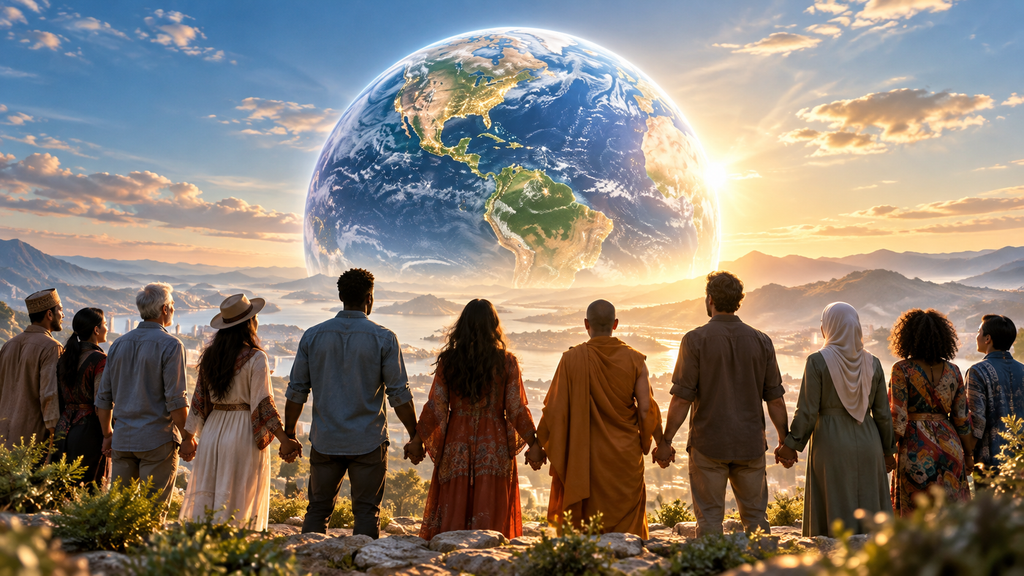
I believe we are capable of building a very different world. One where leadership is not measured by how effectively we control people, but by how successfully we enable them to thrive. Where progress is not achieved at the expense of people or our planet. Where we recognize that our shared humanity is greater than the differences that divide us. A world built on unity, love and mutual respect. And before anyone dismisses love as something soft or unrealistic, let me be clear.
Love is not the absence of strength.
It takes tremendous strength to remain compassionate in a divided world. It takes courage to listen when you disagree. It takes integrity to choose what is right over what is convenient. And unity does not mean we must all think alike. Unity is not the absence of disagreement. It is the ability to disagree without losing our respect for one another. To me, that’s a higher standard of leadership.
It starts with us
We cannot always control the narratives around us. But we can become more conscious of how we respond to them. We can question the information we consume, without denying the reality of genuine threats. We can choose curiosity over judgment. We can recognize when fear is driving our decisions and create the space to respond differently.
And as leaders, we have a particular responsibility. Because the emotional state from which we lead doesn’t stop with us. It influences our organizations, our relationships and the people who place their trust in us. We can lead through fear, or we can create environments where people feel safe enough to think, challenge, innovate and grow. That choice matters.
I don’t believe we will create a better future by fighting fear with more fear. Or division with more division. We need to change the way we operate, individually and collectively. From fear to awareness. From control to trust. From division to connection. From competition at any cost to collaboration for the greater good.
The future doesn’t belong to those who can generate the most fear. It belongs to those who can inspire enough trust for humanity to move forward together.
And perhaps that’s where the real transformation begins. Not with changing the world around us. But with changing the consciousness from which we choose to create it.
With love,
Charlotte, Global Heart Leaders
